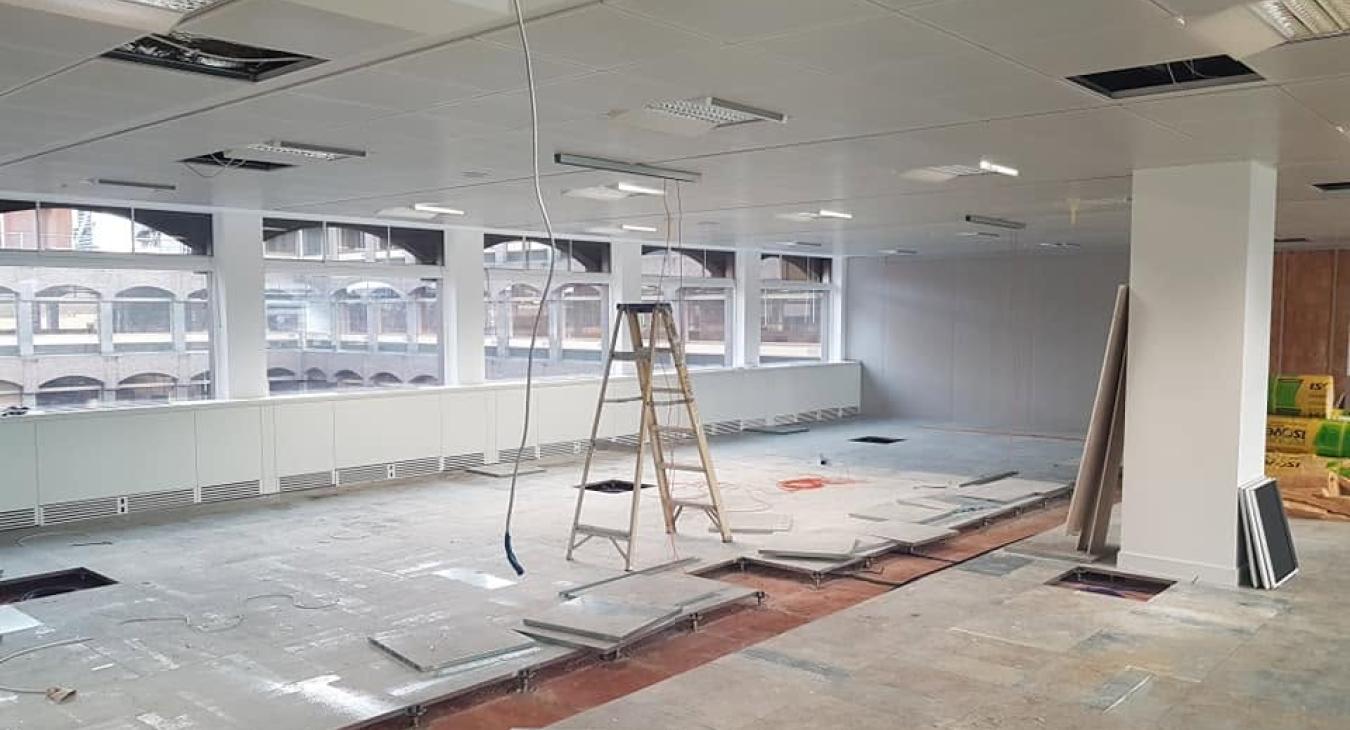
Commercial electrical work is not domestic work at a bigger scale. The standards are different, the legal duties sit in a different place, and the consequences of getting it wrong land on the business owner rather than the homeowner.
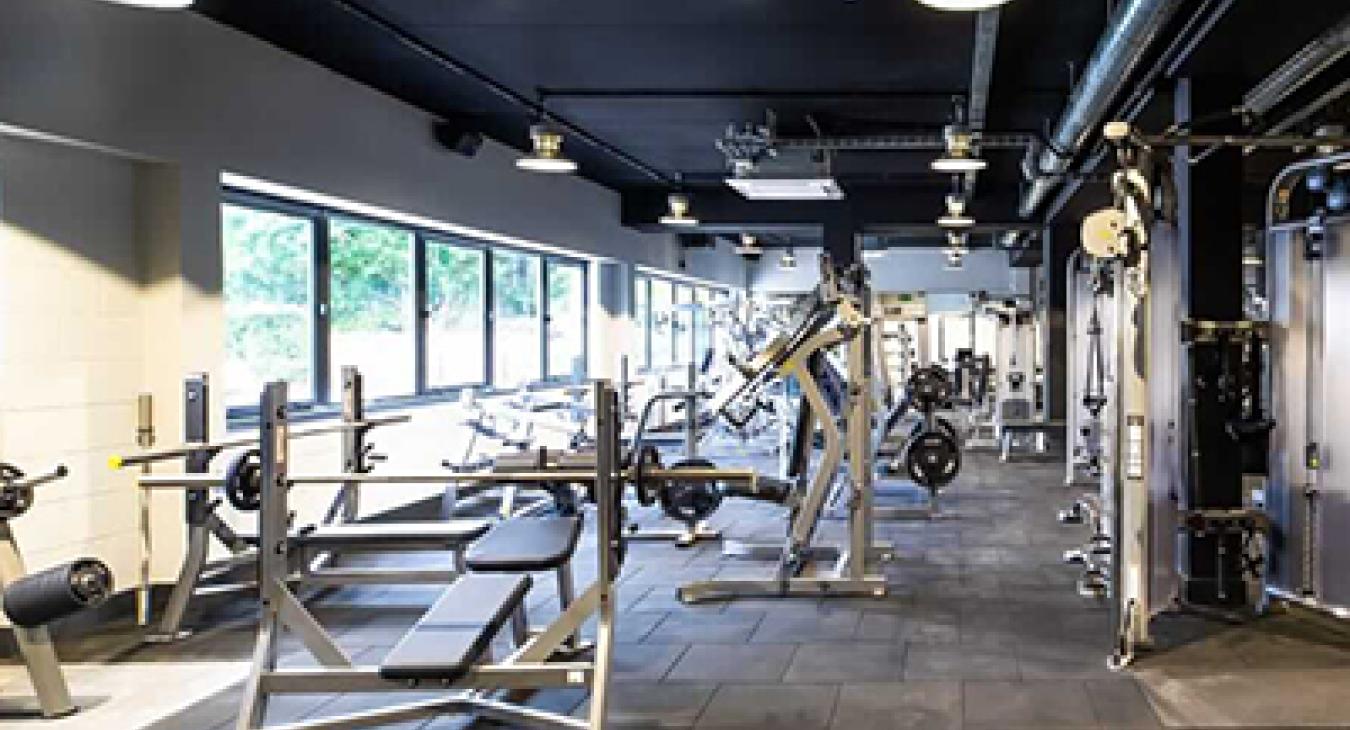
If you run premises in Weybridge, whether that is a shop on Queens Road, an office at Brooklands, a restaurant, a gym, a care setting or a unit on one of the surrounding business parks, this covers the things that come up most often.
Where the legal duty actually sits
The Electricity at Work Regulations 1989 place a duty on employers and those in control of premises to ensure electrical systems are maintained so as to prevent danger, so far as reasonably practicable.
That wording matters. The duty is on maintenance and on preventing danger. It is not satisfied by having had the place wired correctly at some point in the past. It is an ongoing responsibility, and if something goes wrong the question asked will be what you did to discharge it.
In practice, discharging it means having the fixed electrical installation inspected and tested at appropriate intervals, keeping the reports, and acting on what they say. Your insurer will very likely require the same, and it is worth reading what your policy actually says on this rather than assuming.
Fixed wire testing and how often
The inspection of the fixed installation produces an Electrical Installation Condition Report. The interval between inspections depends on the type of premises and how they are used rather than being one number for everybody. Offices and shops sit at one end, environments with higher risk or harsher conditions sit at the other.
The report grades any issues found. Codes indicating danger present or potentially dangerous need acting on, and a report can be recorded as unsatisfactory overall. An unsatisfactory report is not a disaster, but leaving one sitting in a drawer unactioned is a genuine problem, because you now have written evidence that you knew.
The practical approach is to get the report, deal with anything coded as requiring action, and keep both the report and the evidence of the remedial work together.
Emergency lighting is a separate system with its own rules
This is the single most commonly neglected item we come across in commercial premises.
Emergency lighting is covered by its own standard and it carries its own testing regime. It needs a brief function test at regular intervals to confirm the units operate, and a full duration test annually to confirm they will actually run for their rated period. Batteries degrade quietly. A fitting that looks fine and lights up for two seconds during a spot check may last twenty minutes rather than three hours when it matters.
There should be a log book, it should be kept up to date, and it should be available. If your premises has emergency lighting and nobody can find the log, that is the place to start.
The same applies to the interface between electrical systems and fire alarm systems, where these interact. Anything that shuts down, releases or activates on a fire signal needs to have been commissioned properly and needs testing as part of the wider regime.
Portable appliances
In service inspection and testing of electrical equipment, still widely called PAT testing, covers the moveable equipment rather than the fixed installation. Frequency is risk based rather than fixed by law. A power tool on a site gets treated very differently to a desktop monitor in an office that never moves.
The point of it is not the sticker. It is having a system for identifying equipment that has become unsafe before somebody gets hurt by it.
Landlord and tenant: who is responsible for what
A very large proportion of commercial premises in and around Weybridge are leased, and a great deal of confusion comes from leases that are not clear about electrical responsibility.
Broadly, the landlord tends to be responsible for the structure and common parts including the incoming supply and landlord's services, while the tenant is responsible for the demise, which usually includes everything inside their own space. But leases vary enormously and the only reliable answer is in your specific document.
Two situations catch businesses out. The first is taking on a space where the previous tenant's alterations were never certified, which becomes your problem rather than theirs. The second is dilapidations at the end of a lease, where electrical alterations made during occupation have to be removed or reinstated. Keeping certificates for everything you have done during the term makes both of these far easier.
If you are taking on a new unit, having the electrical installation inspected before you sign is a small cost against the possibility of inheriting somebody else's problem.
Three phase, distribution and capacity
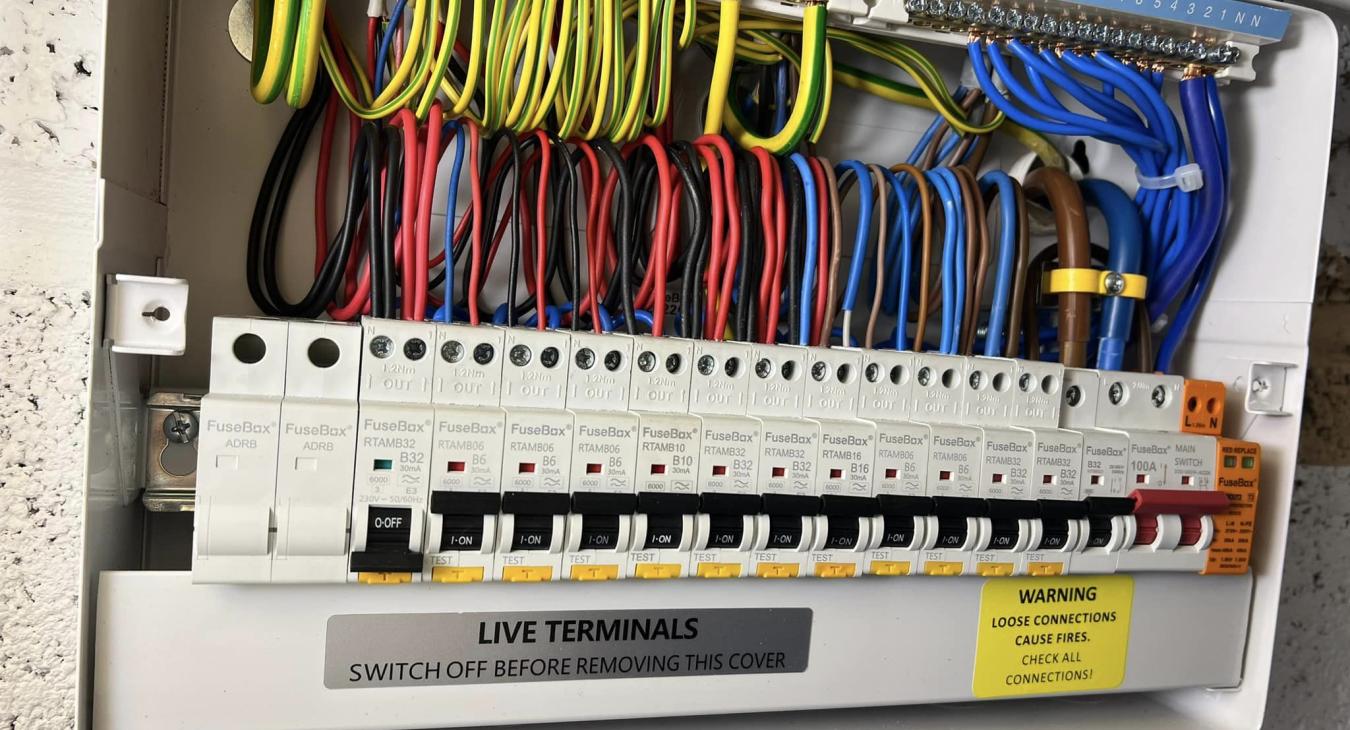
Most commercial premises have a three phase supply, and most have distribution boards feeding sub circuits around the building rather than one board doing everything.
The question that comes up repeatedly is capacity. A space designed as an office twenty years ago was not designed for the load that a modern fit out puts on it. Server equipment, air conditioning, commercial catering, EV charge points in the car park, and machinery in a workshop unit all add up. Before committing to a fit out it is worth establishing what the existing supply can actually carry, because finding out afterwards is expensive and slow. Upgrading a supply involves the distribution network operator and their timescales are not quick.
The same applies to load balancing across phases. An installation where most of the load has ended up on one phase will cause problems that look like faults but are actually design issues.
Working around a trading business
The practical difference between commercial and domestic work is usually the constraint rather than the electrics.
A shop cannot lose power during trading hours. A restaurant cannot lose its refrigeration. An office needs its server room to stay up. A care setting has requirements that do not pause for anybody's convenience.
This means commercial work is often planned around phased isolations, evening or overnight working, and temporary arrangements to keep critical loads running while other parts of the installation are worked on. Getting that plan agreed before the job starts matters as much as the electrical work itself.
Ask any contractor how they intend to sequence the work. If they have not thought about it, that is your answer.
Energy and running costs
Lighting is usually the easiest saving in a commercial building, particularly where older fittings are still in place. LED replacement, sensible zoning, and controls that switch things off when nobody is there tend to pay back reasonably quickly in a building that operates long hours.
Sub metering is worth considering in multi occupancy buildings or where you want to understand which parts of an operation are actually consuming what. You cannot manage what you are not measuring.
None of this is exciting, but it is usually where the money is.
What to look for in a commercial contractor
Beyond the basics of registration and insurance, three things matter for commercial work specifically. On registration, it is worth knowing that NICEIC Approved Contractor is the assessed tier covering commercial and industrial work, rather than the domestic installer registration that many smaller firms hold.
Experience of your type of premises, because a contractor who mainly does housing is not automatically the right fit for a commercial fit out. Proper documentation as standard, including certificates, test results and updated schedules. And the ability to work around your operation rather than expecting your operation to work around them.
Talk to us
We are an NICEIC Approved Contractor based in Walton-on-Thames, and we carry out commercial electrical work across Weybridge and the surrounding Elmbridge area. That covers commercial maintenance, office lighting and office power installations, office rewires, emergency lighting, fire alarm systems, EICRs, PAT testing, three phase distribution boards, data cabling, and installations for retail units, gyms and warehouses.
If you have premises that need looking at, or you are taking on a new space and want to know what you are inheriting, get in touch and we will arrange a visit.